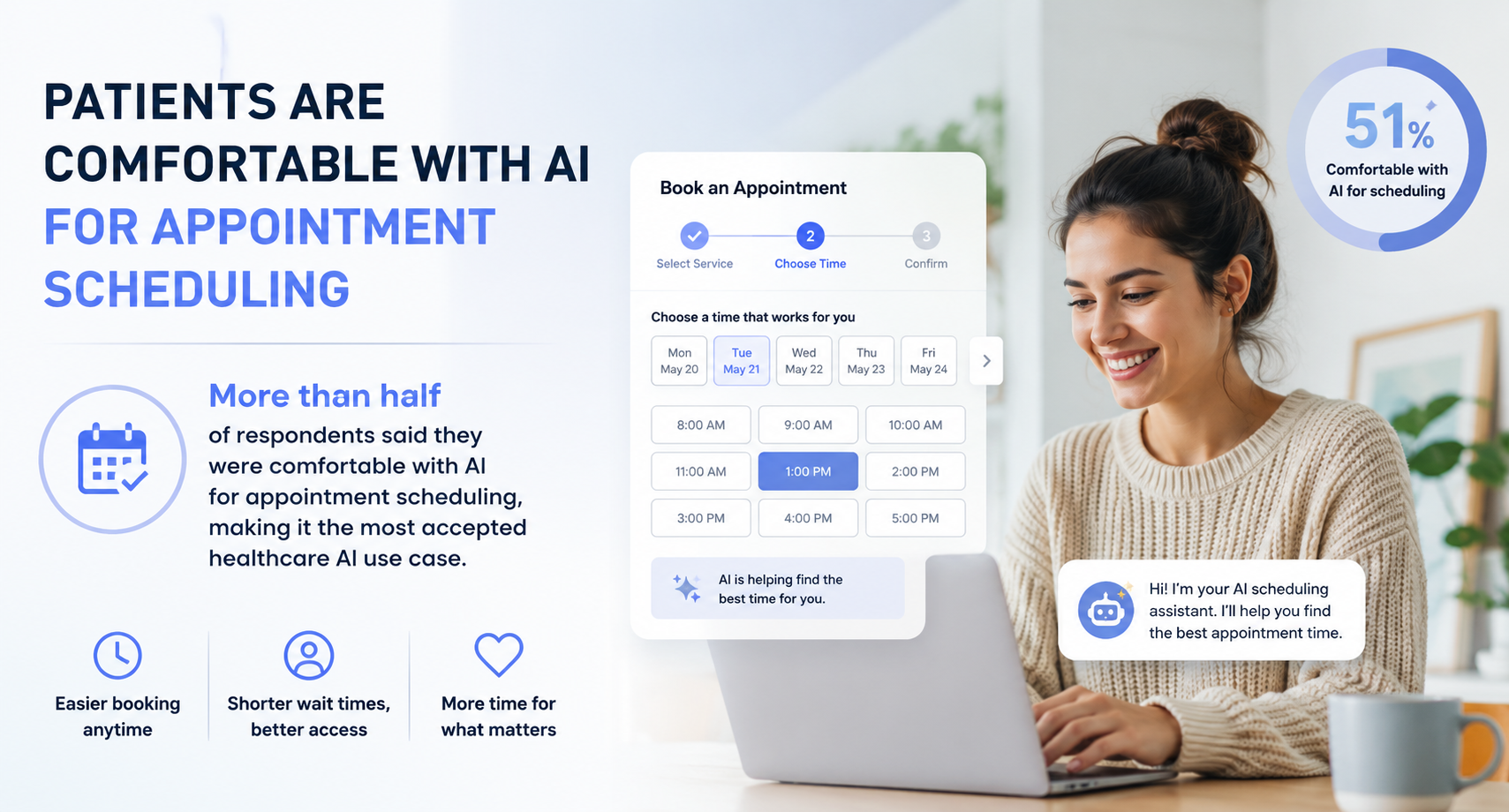
A new AMA report highlights a growing divide in healthcare AI adoption: physicians are increasingly embracing AI tools, while patients remain cautious when AI moves deeper into clinical care. But buried inside the findings is a much more important signal for the future of healthcare operations — patients are already comfortable with AI when it solves a clear administrative problem.
In fact, more than half of respondents said they were comfortable with AI being used for appointment scheduling, making it the most accepted healthcare AI use case among patients. That distinction matters.
While headlines often focus on AI diagnostics, treatment recommendations, or autonomous clinical decision-making, patients appear to be drawing a much more practical line: they are open to AI when it improves access, convenience, and responsiveness without replacing the human relationship with their doctor.
The data increasingly suggests that scheduling and administrative coordination may become healthcare AI’s defining “trust beachhead.”
Healthcare organizations have long struggled with operational friction around scheduling, intake, cancellations, reminders, and patient coordination. These workflows are repetitive, labor-intensive, and often frustrating for patients. AI-powered scheduling systems offer an opportunity to reduce wait times, simplify booking experiences, and free staff to focus on higher-value patient interactions. That operational value is already resonating.
The broader healthcare AI market continues to show strong momentum around administrative automation. Physicians are increasingly optimistic about AI tools that reduce documentation burdens and workflow inefficiencies, even as concerns remain around accuracy and governance in clinical contexts. Importantly, patient sentiment appears to mirror that same distinction.
Patients are far more receptive to AI helping with logistics than with diagnosis or treatment decisions. Concerns rise significantly when AI begins influencing clinical care, especially if patients believe technology could reduce face time with physicians or diminish human oversight.
The TASBIA™ Bottom Line
Appointment scheduling represents one of the few AI use cases where providers, administrators, and patients all appear aligned around the benefits. Unlike clinical AI, scheduling automation is easy to understand, low risk, and immediately visible to patients through shorter wait times, easier booking, and better communication.
The healthcare industry may ultimately adopt sophisticated clinical AI systems at scale. But patient acceptance is likely to happen incrementally — beginning with the operational workflows people already dislike.
And right now, scheduling appears to be leading the way.
